
Protection from sun and oil
Sealcoating in Ontario, CA
The cheapest way to slow the sun damage that turns asphalt gray and brittle.
- Free on-site estimates
- Itemized written quote before work starts
- Base depth and asphalt thickness stated in every quote
Why Asphalt Needs Sealing Here
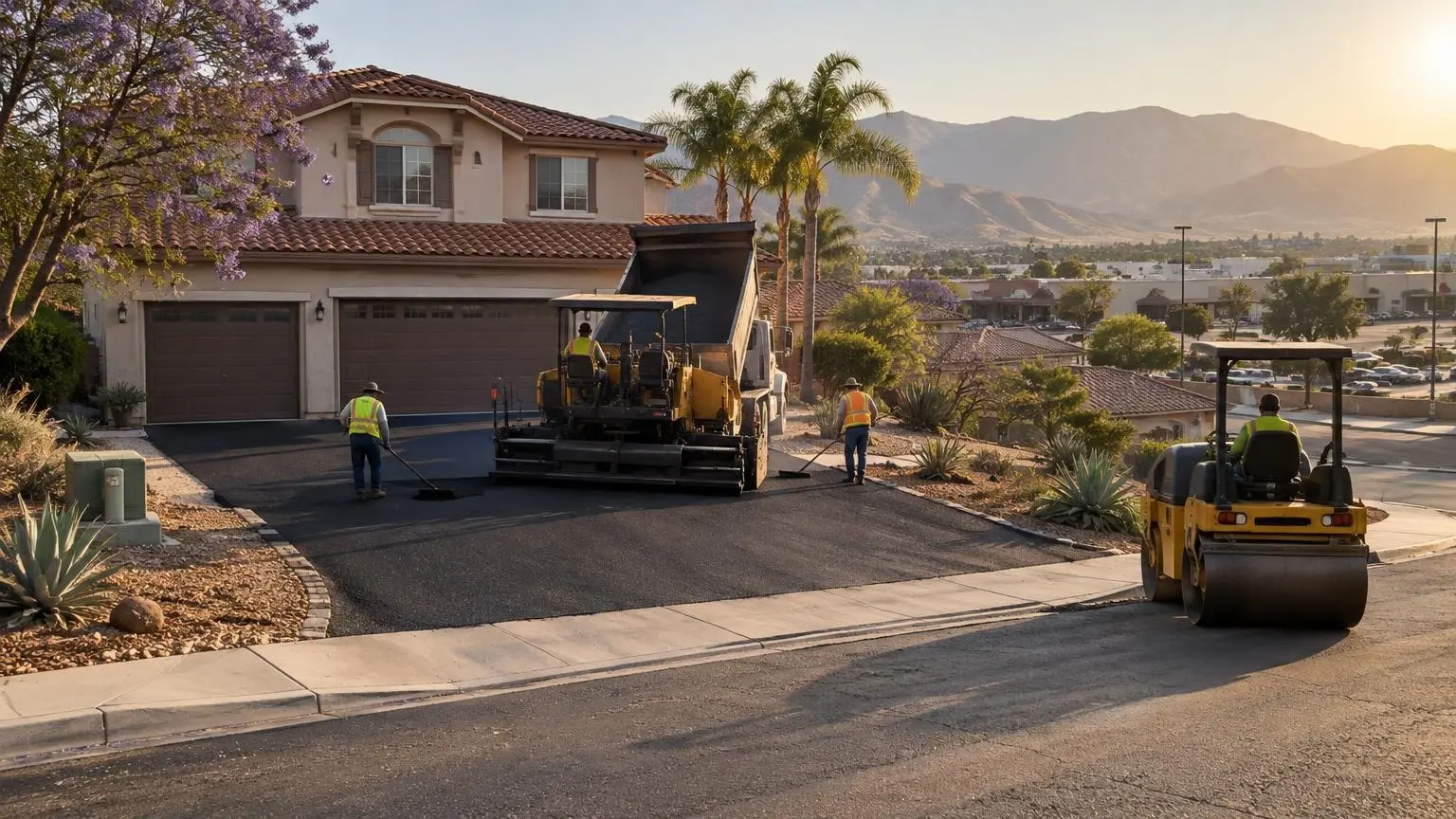
Sealcoating puts a thin protective layer over asphalt pavement. In Ontario, where the sun shines most days and summer highs average in the 90s, ultraviolet light and heat dry out the asphalt binder faster than in cooler climates. Unprotected pavement turns gray, then starts to lose fine sand and small stones from the surface. A sealcoat replaces that worn top film, keeps oil and gas from soaking in, and gives the pavement a uniform black finish.
When to seal
New asphalt needs to cure first. HomeGuide recommends waiting 3 to 6 months after paving. After that, resealing every few years is typical; HomeAdvisor suggests every two to five years for parking lots, and HomeGuide gives a range of 2 to 10 years depending on the sealant and climate. In practice, when the surface has turned noticeably gray and you can see the stones, it is time.
Weather
Sealer needs dry pavement and moderate temperatures to cure. HomeGuide puts the range at 50 to 95 degrees. That makes spring and fall the easiest seasons in the Inland Empire. In midsummer we work in the morning, before the pavement gets too hot. Rain is rare from May through October, which helps, but we watch the forecast in winter. Cure time before driving is typically 12 to 72 hours.
What goes into a proper sealcoat
- Cleaning: sweeping and blowing the surface, and treating oil spots so the sealer bonds
- Crack filling: open cracks are filled first, because sealer alone does not bridge them
- Edging: hand work along curbs, garage slabs and planters
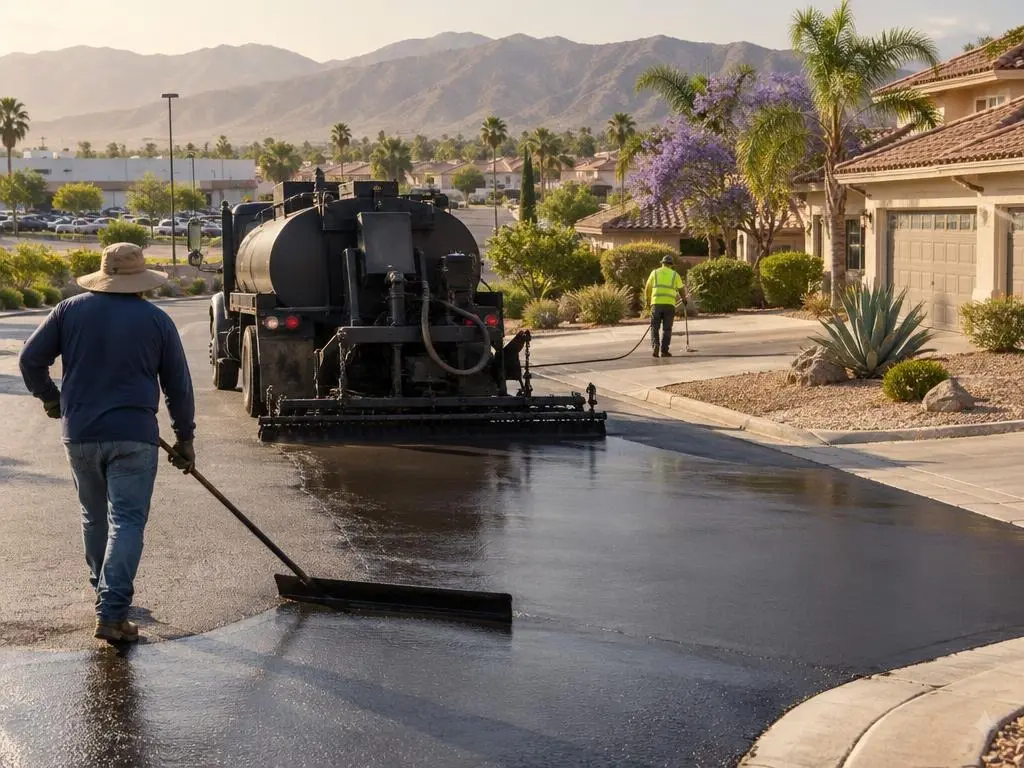
- Application: sealer sprayed or squeegeed on in one or two coats
- Barricades: the area is blocked off until it has cured
Sealer types
Most sealers are either refined-tar (coal tar) or asphalt emulsion. HomeGuide notes that coal tar has been banned in many places because of health and environmental concerns, and that asphalt polymer emulsions are considered more environmentally friendly. We use asphalt-based emulsion sealers. Ontario is also in the South Coast air district, which regulates volatile organic compounds in coatings, another reason water-based emulsions are the standard here.
Sealcoating is not a repair
A sealcoat protects pavement that is still structurally sound. It does not fix potholes, alligator cracking or ruts. If we see those, we include patching in the quote or tell you that the area needs repair first.
What This Covers
Sealcoating for homes, HOAs and commercial lots.
Surface cleaning
Sweeping, blowing and oil-spot treatment before any sealer goes down.
Crack filling
Open cracks filled with hot or cold filler before sealing.
Driveway sealcoating
One or two coats with hand-cut edges along concrete and landscaping.
Parking lot sealcoating
Lots sealed in sections, with restriping after cure.
Typical Sealcoating Costs
| Item | Published national range |
|---|---|
| Driveway sealing, labor and materials (HomeGuide) | $1 to $2 per sq ft |
| 400 sq ft two-car driveway (HomeGuide) | $400 to $800 |
| 576 sq ft two-car driveway (HomeGuide) | $580 to $1,200 |
| National average driveway job (HomeGuide) | About $600 |
| Parking lot sealcoating (HomeAdvisor) | $0.15 to $0.30 per sq ft |
Published national ranges; each guide calculates its own way, so the figures do not line up exactly. Prices in the Inland Empire can differ, and removal, base repair, access and minimum charges move the total. The figure on your written estimate is the price.
How It Works
1. Inspection
We check the surface for cracks, oil and areas that need repair first.
2. Prep
Cleaning, oil treatment and crack filling.
3. Application
Sealer applied in one or two coats in dry weather.
4. Cure
The area stays blocked off until it is ready for traffic.
Sealcoating Questions
How often should I sealcoat my driveway in Ontario?
Every few years for most driveways, depending on sun exposure, traffic and the sealer used. When the surface turns gray and stones start to show, it is due. Sealing too often can build up a film that peels.
How soon can I drive on it?
Usually within 12 to 72 hours, depending on temperature and humidity. In warm, dry weather it cures faster. We tell you the timing for your job.
Does sealcoating fill cracks?
No. Sealer is thin and does not bridge cracks. We fill cracks first, then seal over them.
Will sealcoat make my driveway hotter?
Fresh sealcoat is black and absorbs sunlight, so it feels hot in summer, just as new asphalt does. It does not change how the pavement performs, and it fades to a dark gray over time.
Sealcoating Service Areas
- Asphalt Paving in Ontario, CA
- Asphalt Paving in Upland, CA
- Asphalt Paving in Rancho Cucamonga, CA
- Asphalt Paving in Montclair, CA
- Asphalt Paving in Chino, CA
- Asphalt Paving in Chino Hills, CA
- Asphalt Paving in Pomona, CA
- Asphalt Paving in Claremont, CA
- Asphalt Paving in Fontana, CA
- Asphalt Paving in Eastvale, CA
- Asphalt Paving in Jurupa Valley, CA
- Asphalt Paving in Norco, CA
- Asphalt Paving in Corona, CA
- Asphalt Paving in La Verne, CA
- Asphalt Paving in San Dimas, CA
- Asphalt Paving in Diamond Bar, CA
- Asphalt Paving in Rialto, CA
- Asphalt Paving in Walnut, CA
- Asphalt Paving in Colton, CA
- Asphalt Paving in Riverside, CA
- Asphalt Paving in Bloomington, CA
Get a Sealcoating Estimate
Free sealcoating estimates in Ontario and nearby cities.