
Birthplace of California's navel orange industry
Asphalt Paving in Riverside, CA
A large, old city with historic neighborhoods and newer tracts across 81 square miles.
- Free on-site estimates
- Itemized written quote before work starts
- Base depth and asphalt thickness stated in every quote
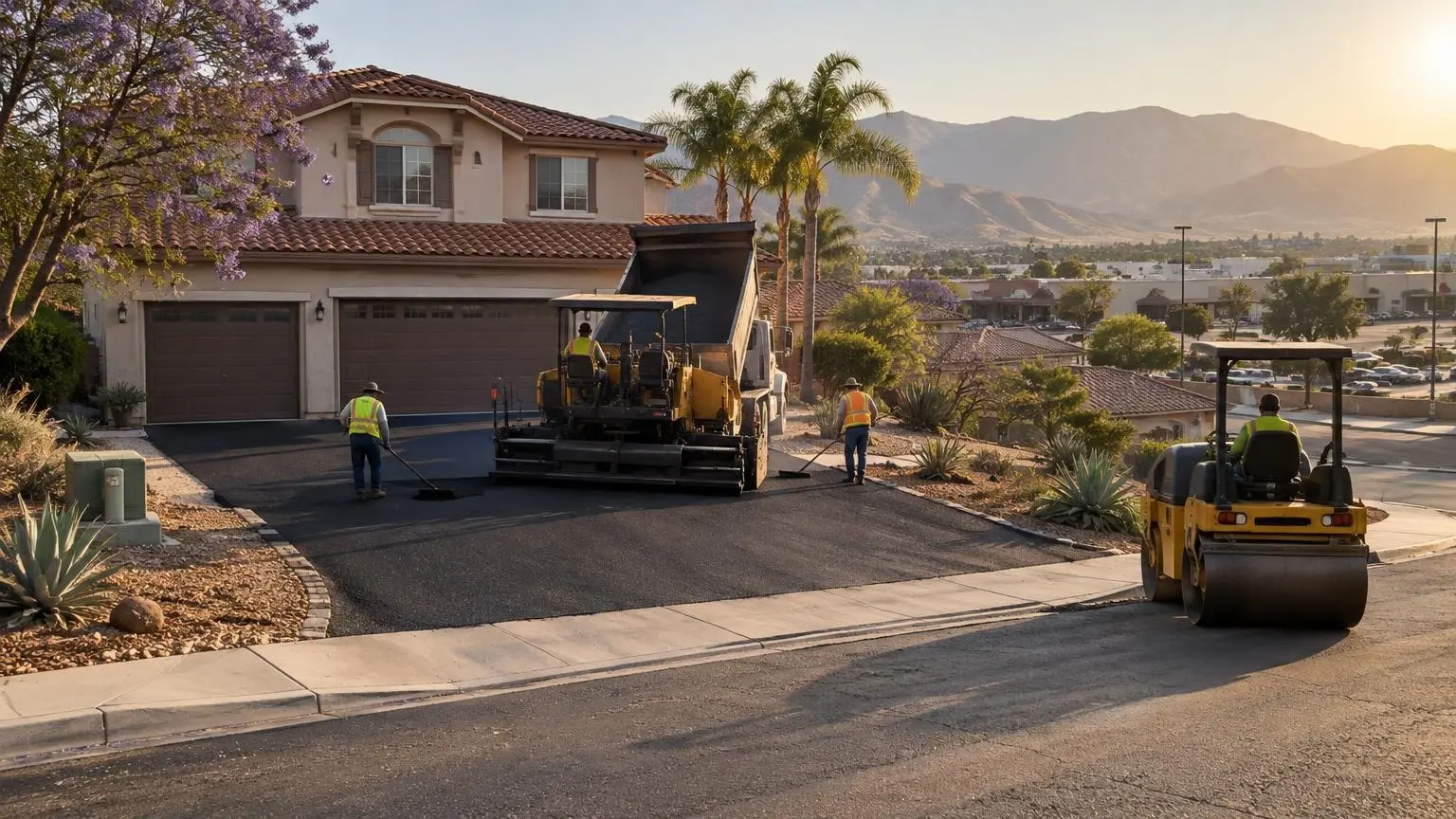
Paving in the Inland Empire's Largest City
Asphalt paving in Riverside covers a lot of ground, 81 square miles and nearly 315,000 residents at the 2020 census. Riverside incorporated on October 11, 1883, and in 1874 Eliza Tibbets planted the navel orange trees that started California's navel orange industry; the Parent Navel Orange Tree still stands. By 1895, Riverside was described as the wealthiest city per capita in the United States. That history shows up in the housing: Victorian and Craftsman homes near downtown, postwar neighborhoods, and newer tracts on the edges.
Semi-arid climate
Riverside is drier than the cities to the west, with about 9.4 inches of rain a year and a semi-arid climate. July highs average about 93 degrees, and the record is 118. The long dry season is hard on unsealed asphalt, which oxidizes and ravels in the sun. Sealing every few years is the cheapest way to slow that down. When it does rain, storms can be heavy, so drainage still matters.
Historic neighborhoods
Older homes near downtown and the Mission Inn often have narrow side drives, detached garages and mature trees. Many driveways were paved thin over little base. When those fail, removal and a new base are the fix. We work carefully near old walls, curbs and landscaping.
Newer tracts and HOAs
Newer neighborhoods and HOAs on the edges of the city have younger pavement that needs sealing, crack filling and occasional patching. Private streets and community lots do best on a maintenance schedule.
Commercial and freeway areas
Interstate 215, State Route 60 and State Route 91 meet in northeastern Riverside, and the city is home to the University of California, Riverside and several colleges. Commercial lots near the freeways see heavy traffic and need regular maintenance and striping.
Common Riverside projects
- Replacing thin, old driveways in historic neighborhoods near downtown and Wood Streets
- Overlays and replacements in postwar and 1980s neighborhoods
- Sealcoating and crack filling to slow sun damage in the dry climate
- HOA street and community lot maintenance
- Retail, office and campus lot repair and striping
Riverside is large enough that soils vary from sandy river terraces to rocky hillsides around Mount Rubidoux and Box Springs. We check the subgrade on every job rather than assuming.
Planning a Riverside project
Riverside gets about 9.4 inches of rain a year, most of it from November through April. That makes most of the year good paving weather, though July highs average 93 degrees, so summer work starts early. With fewer rainy days than cities to the west, the main threat to pavement is the sun, and a regular sealcoat schedule is the best protection. For historic homes, we keep the work area tidy and protect landscaping and old curbs.
Call (909) 612-9922 for a free Riverside estimate, or
.Riverside at a Glance
- Navel orange history. In 1874 Eliza Tibbets received three Brazilian navel orange trees from the USDA, starting California's navel orange industry. By 1882, almost half of California's citrus trees were in Riverside.
- Semi-arid climate. Riverside averages about 9.39 inches of rain a year and has a semi-arid climate. The July mean high is 93.3 degrees, and the record high is 118.
- Large and old. Riverside incorporated on October 11, 1883. It covers about 81 square miles of land and had 314,998 residents in 2020.
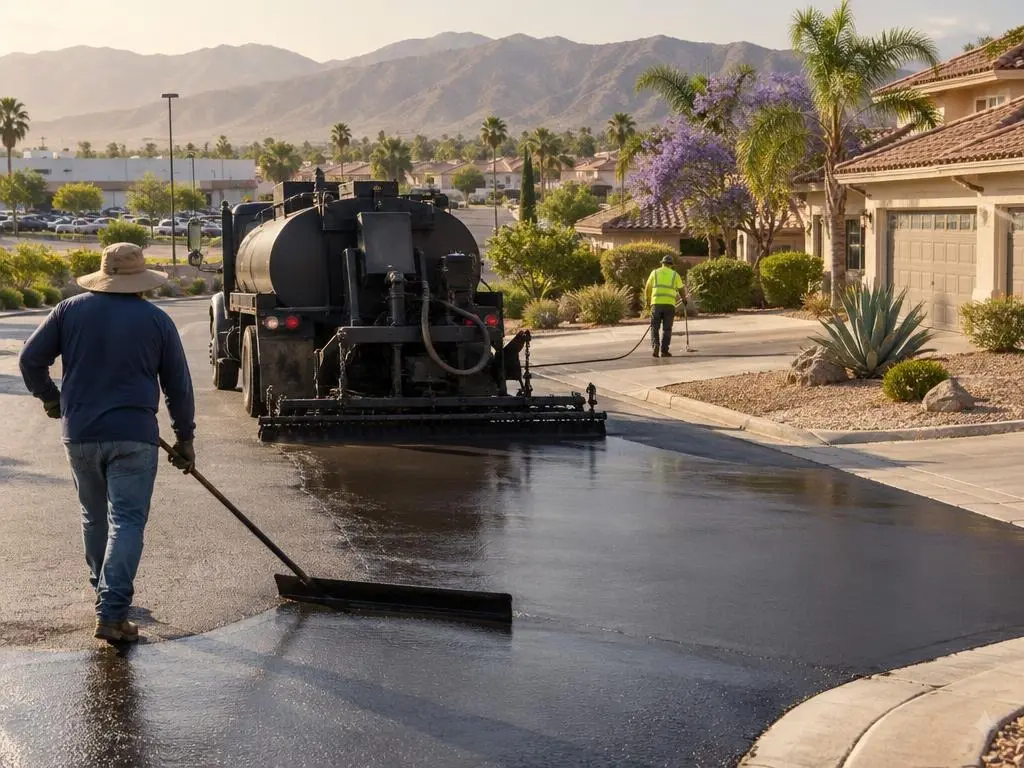
Our Services in Riverside, CA
Riverside Questions
How often should I seal my Riverside driveway?
Every few years, depending on sun exposure and traffic. In Riverside's dry climate, sun damage is the main thing sealing prevents.
Can you work on a historic property?
Yes. We take care around old walls, curbs and landscaping and keep the work area clean.
Do you pave commercial lots near the freeways?
Yes, including repairs, overlays, sealing and striping.
Is Riverside's dry climate hard on asphalt?
The sun is. Long dry seasons oxidize unsealed asphalt and make it brittle. Sealing every few years is the most cost-effective protection.
Do you work near the Santa Ana River?
Yes. Low areas can hold water after storms, so drainage is checked first.
What is the best season to pave in Riverside?
Spring and fall are most comfortable, but dry weather makes most of the year workable. Summer jobs start early in the day.
Do you repave driveways in the Wood Streets and other historic areas?
Yes, with careful edge work along old walkways and curbs. Any work in the parkway or curb is city right-of-way, which we confirm with the City of Riverside first.
My driveway has large cracks but no sinking. What is the fix?
Usually crack filling and a sealcoat. If cracks have started to connect into a web, patching those areas first is wise.
Asphalt Paving Near Riverside
- Asphalt Paving in Ontario, CA
- Asphalt Paving in Upland, CA
- Asphalt Paving in Rancho Cucamonga, CA
- Asphalt Paving in Montclair, CA
- Asphalt Paving in Chino, CA
- Asphalt Paving in Chino Hills, CA
- Asphalt Paving in Pomona, CA
- Asphalt Paving in Claremont, CA
- Asphalt Paving in Fontana, CA
- Asphalt Paving in Eastvale, CA
- Asphalt Paving in Jurupa Valley, CA
- Asphalt Paving in Norco, CA
- Asphalt Paving in Corona, CA
- Asphalt Paving in La Verne, CA
- Asphalt Paving in San Dimas, CA
- Asphalt Paving in Diamond Bar, CA
- Asphalt Paving in Rialto, CA
- Asphalt Paving in Walnut, CA
- Asphalt Paving in Colton, CA
- Asphalt Paving in Bloomington, CA